

Flawed Contracts in Land-Share Construction and Urban Transformation Processes Create Irreversible Injustices
Given that our country lies within an earthquake zone, that the demand for housing exceeds the available supply relative to the population, and that a great many existing structures are in need of renewal, the construction sector occupies a position of considerable importance. In addressing these needs for transformation and housing, the methods most commonly employed are land-share flat construction and urban transformation works.
As of 2022, we continually witness a great number of incomplete projects that have strayed from their original purpose, landowners dispossessed of their plots, parties to agreements who have suffered losses of entitlement, and legal proceedings that drag on for years. When one examines the root causes of the grievances that have emerged, the most compelling explanations, in the majority of cases, are the presence of provisions susceptible to abuse in the contracts drawn up at the outset of the process, and the failure to take preventive measures.
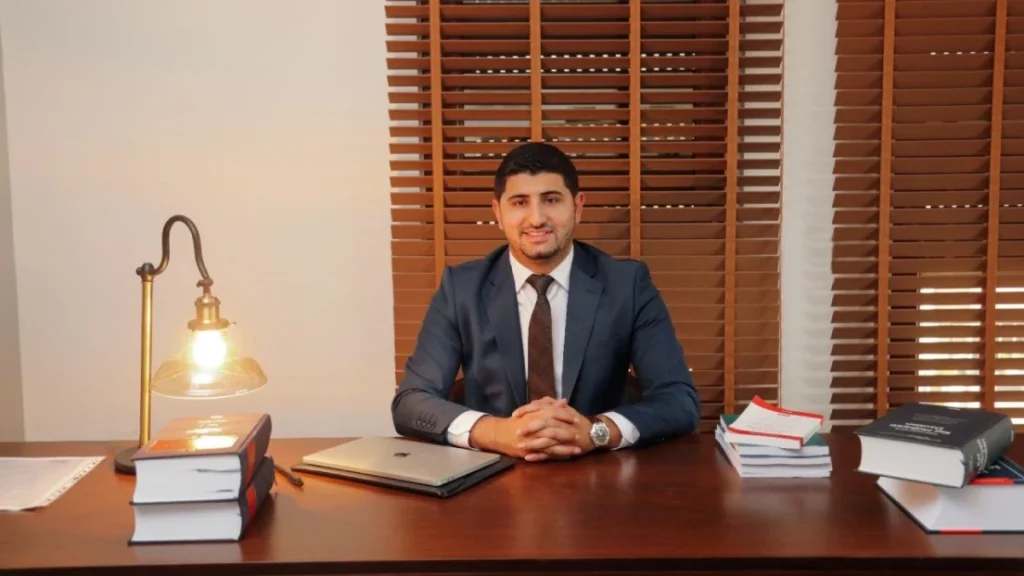
With a view to raising public awareness and ensuring that citizens are not left worse off, we put our questions to solicitor Barış Mükyen, who practises in the fields of construction law and urban transformation law, in order to shed light on the injustices that arise and to help people understand their rights.
“Being good is easy, what is difficult is being just.” ― Victor Hugo
1. What kinds of grievances do you encounter in land-share flat construction and urban transformation processes?
In relation to the processes you mention, we come across perhaps thousands of different grievances, losses of entitlement, and instances of bad faith, which vary from project to project. Although we frequently encounter grievances specific to the particular variables and needs of an individual project, there are also recurring situations that give rise to serious losses of rights. To summarise these briefly under headings, they include: occupancy permits, transfer of land shares, establishment of floor easements, excess construction, technical specifications, management plans, allocation, loss of square footage, expenses, additional charges, delays, rent, and common areas. We continually encounter serious losses of rights in connection with such matters.
2. If that is the case, why is the contract so important in these processes?
If we think of urban transformation and land-share flat construction as a “building”, its foundation is the contract concluded between the contractor and the landowners. As you will appreciate, just as a structure cannot be sound when its foundations are weak, the same holds true here. To put it plainly, beyond the use of metaphor: construction is a process, and the contract may be thought of as the guarantee document for the whole of that process. A legally and technically sound land-share flat construction contract safeguards the parties’ gains, acts as a preventive measure against potential grievances, provides protection against unforeseen circumstances, and ensures that the parties share in any additional gains that may arise. In addition to regulating the quality of the work to be carried out, it also sets out the principles governing common use. It ensures that legal and technical precautions are in place to address every eventuality that may arise during the various stages of construction — which, as noted, is a process. Furthermore, should the process fail to proceed as it ought, the contract prevents losses of entitlement and protects the gains of the parties.
3. Given that contracts are so important, what should be borne in mind when drafting them?
Agreements of the kind that form the subject matter of land-share flat construction contracts involve, when considered in their totality, arrangements concerning significant sums of money. The risks assumed by the parties, the value of the properties subject to the agreement, and the potential expenditure to be incurred in constructing the building all correspond to substantial figures. Despite the importance and high value of these agreements, however, we very rarely observe the parties — and in particular the landowners — obtaining technical and legal support. The only way to set out comprehensively what must be borne in mind when drafting contracts is to examine each individual project on its own terms. That said, from a general perspective, the key matters that apply to virtually all projects are as follows. From the landowner’s standpoint, particular care should be taken to ensure that the following are addressed as separate headings: investigation of the contracting firm, clear determination of the sharing scheme, inclusion of technical specifications, obtaining a mortgage as security for the occupancy permit, and legal regulation of prominent issues such as excess construction, additional charges, management plan, square footage, penalty clauses, and timeframes. From the contractor’s standpoint, equally, the following matters, amongst others, should be addressed under separate headings: transfer of land shares, floor easements, penalty clauses, detailed determination of the planning status of the relevant plots, costs, and timeframes.

4. What would you recommend to members of the public who find themselves in similar processes?
I can state quite clearly that the root cause of processes going wrong is invariably a failure to act with due awareness. Sometimes this manifests as entering into an agreement on the basis of disproportionate demands; sometimes as arrangements that lack proper legal grounding; and sometimes as proceeding in a manner disconnected from technical reality. If the project in question involves a property undergoing urban transformation or classified as a risky structure or area, the owners must absolutely act in consensus and must have regard to the formal requirements. Citizens involved solely in a land-share flat construction process should conduct thorough research into the planning details of their property, carry out a proper analysis of the contracting firm, and ensure that they are party to contracts that correctly protect their rights from every technical and legal standpoint. In practice, although such processes often begin with declarations of mutual trust or optimistic assumptions, we invariably witness parties who fail to make sufficiently concrete arrangements and to carry out proper due diligence suffering irreversible harm as the process unfolds. I would strongly recommend that anyone managing such a process seek both technical and legal support.
Source
“https://www.haberler.com/haberler/kat-karsiligi-insaat-ve-kentsel-donusum-15399725-haberi/